

The auditors of the Post Office have questions to answer about why they did not flag accounting failures in the Horizon IT system
Post Office auditors should be questioned, MPs told
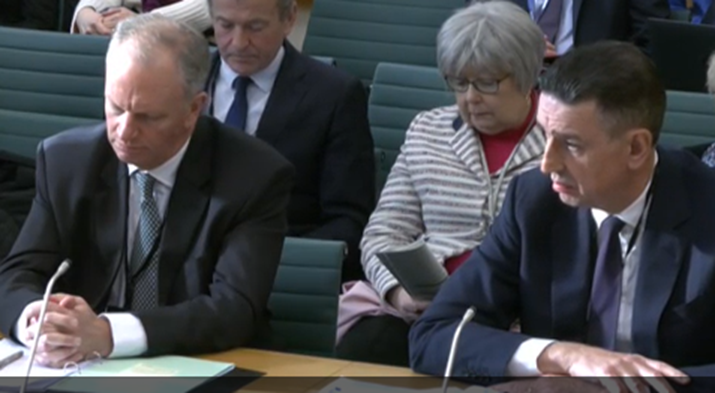
MPs on the Business & Trade Committee questioned the bosses of Fujitsu and the Post Office, Lord Arbuthnot and lawyers at a hearing about the Post Office and Horizon compensation scheme.
Witnesses were questioned about why the Post Office failed to stop prosecutions and ignored warnings from Fujitsu about problems with the IT software rolled out across post office branches.
Lord Arbuthnot, who has been a long-time supporter of the sub-postmasters, was asked about the role of the auditors during the accounting scandal, and whether they should have taken more action.
‘Auditors either did or should have noticed that there was a potential liability building up within the post office that was likely to give rise to costs of £1bn,’ said Lord Arbuthnot.
‘If the auditors failed to realise that, was it because they were not looking at the right things or was it because they were ticking boxes? Or did they realise that and not bring it to the right people’s attention with sufficient oomph?’
Big Four firm EY was auditor of the Post Office until February 2019 when PwC took over the audit business. EY had started auditing Royal Mail in 1986, when it was responsible for the Post Office and remained as auditor once the business was hived off. When EY stepped down, it was earning around £1m a year in audit and non-audit fees for work on the parent and group company, and a group subsidiary.
In the annual report and accounts for 2017-18, audited by EY, Horizon was mentioned only once, stating that the Post Office was facing a group litigation ‘alleging defects in the Horizon system and Post Office’s internal processes’.
Six years later the government is introducing legislation to exonerate all the sub-postmasters mistakenly prosecuted over accounting fraud by the Post Office, first announced by the prime minister earlier this month.
At the committee hearing, MPs questioned Paul Patterson (pictured right), CEO and head of Western and Northern Europe for Fujitsu Services over the IT company’s role in the Horizon scandal.
‘Our standards were not at the level we adhere to – I am personally appalled by the evidence that I have seen both on the TV drama and from the witness statements,’ Patterson told MPs.
When questioned about the timing of the Fujitsu disclosures to the Post Office about the scale of the IT problems, Patterson said that he did not have that information as he had only been CEO since July 2019. Prior to that he was VP and head of strategic sales since 2016, and group sales and marketing director since 2011, having joined the business in 2010.
He admitted that historically Fujitsu had been ‘supporting the Post Office in their prosecutions and data was given to the Post Office’.
When questioned about whether the Post Office knew about the scale of IT problems, Patterson said that ‘the Post Office also knew there were bugs and errors’.
MPs pressed Patterson on the scale of the problem and knowledge of the issue internally at Fujitsu, asking: Were there issues with Horizon system and were Fujitsu staff aware of it? He was reticent to answer the question, stressing that he was not CEO at the time, but admitted ‘my gut feeling is that yes, they knew’.
Another area of concern for the MPs was whether there was ‘covert activity – remotely accessing sub-postmasters’ accounts’, by Fujitsu.
Patterson acknowledged that ‘support and interventions from Fujitsu were known by the Post Office’.
When asked whether Fujitsu should pay towards the compensation for sub-postmasters, Patterson said there was a ‘moral obligation for the company to contribute’, adding that there were ‘many parties involved in this travesty’.
The head of the Post Office, Nick Dean (pictured left), is also relatively new in the job, having joined the organisation as CEO in 2019 in a move from Vodafone. In many of his answers he replied that information being requested had been given to the ongoing statutory inquiry, led by Sir Wyn Williams.
‘I’ve only been at PO since 2019, we are cooperating with the enquiry,’ Dean said.
He said that the Post Office had supplied over 125,000 documents to the inquiry.
This did not deter the committee members, who questioned Dean about why when whistleblowers came forward and said there were problems with the Horizon system, they were ignored. ‘Why didn’t PO and Fujitsu listen to these sub-postmasters?’
Dean swerved the question, saying that he ‘empathised’ with the victims.
Reflecting the frustration of the MPs, they repeatedly asked why Fujitsu took no action about the IT problem.
‘When you knew there were glitches in the system why did you sit back and do nothing about it?’ MPs asked.
Patterson said: ‘I just don’t know and I know the enquiry is looking at this.’
He added: ‘There were bugs and errors in the system from the very early stage when it rolled out. There will always be bugs and errors when you roll out a large system. We passed the information on to the Post Office.’
One MP expressed his frustration, saying: ‘I haven’t had any answers to the questions I have asked and I am absolutely appalled at the answers I have been given.’
As far back as 2001, a whistleblower reported that remote access to Horizon accounts was possible. Dean was asked when Post Office staff knew that remote access to terminals was possible.
‘I cannot give you an answer to that question, but I will report back as this information was given to the inquiry.’
Dean was also asked about the culture at the Post Office when he joined.
‘The organisation was in shock and paralysis as a result of the Horizon judgment. That is why we settled with the GLO as quickly as possible. I do think it was dominating everything and that is why it was important to settle it.’
With a potential compensation bill of £1bn, Dean was asked whether provision had been made for the settlement.
Dean said: ‘I don’t accept the figure, but we have been concerned that people are not coming forward and that is a problem for us. We reduced our provisions as people were not coming forward to claim compensation. I think it is unlikely to be that size, but it could be.’
MPs also questioned Dean about the tax liability for the compensation payments as tax relief has been claimed, totalling an estimated £100m.
‘We have been having conversations with HMRC since last year about how we treat compensation payments,’ said Dean.
The 2023 Post Office annual report stated that a figure had not been agreed with HMRC as it was contingent on potential taxation liabilities.
‘While the directors recognise that an adverse outcome could be material, they are currently unable to determine whether the outcome of the discussions would have a material adverse impact on the consolidated position of the group and are unlikely to be able to do so until the discussions with HMRC are substantially concluded,’ the ARA stated.
Since the group litigation was finalised, Fujitsu earned £95m in contract extensions to handle maintenance of the Horizon IT system, which the Post Office is currently looking to replace but has not made any decisions as yet, Dean told MPs.
Sara White writes in Accountancy Daily